Voice assistant · Smart home
R7 Home
One touchscreen and one voice for a household's lights, music, reminders, plans and memory.
- Status
- Running at home
- What's in it
- Touchscreen dashboard · Wake word and voice replies · Presence sensors · Runs on a Raspberry Pi
The problem
Smart-home gear comes with one app per brand. The lights live in one app, the music in another, and reminders sit on someone’s phone. Nobody in the house remembers which is which.
What I built
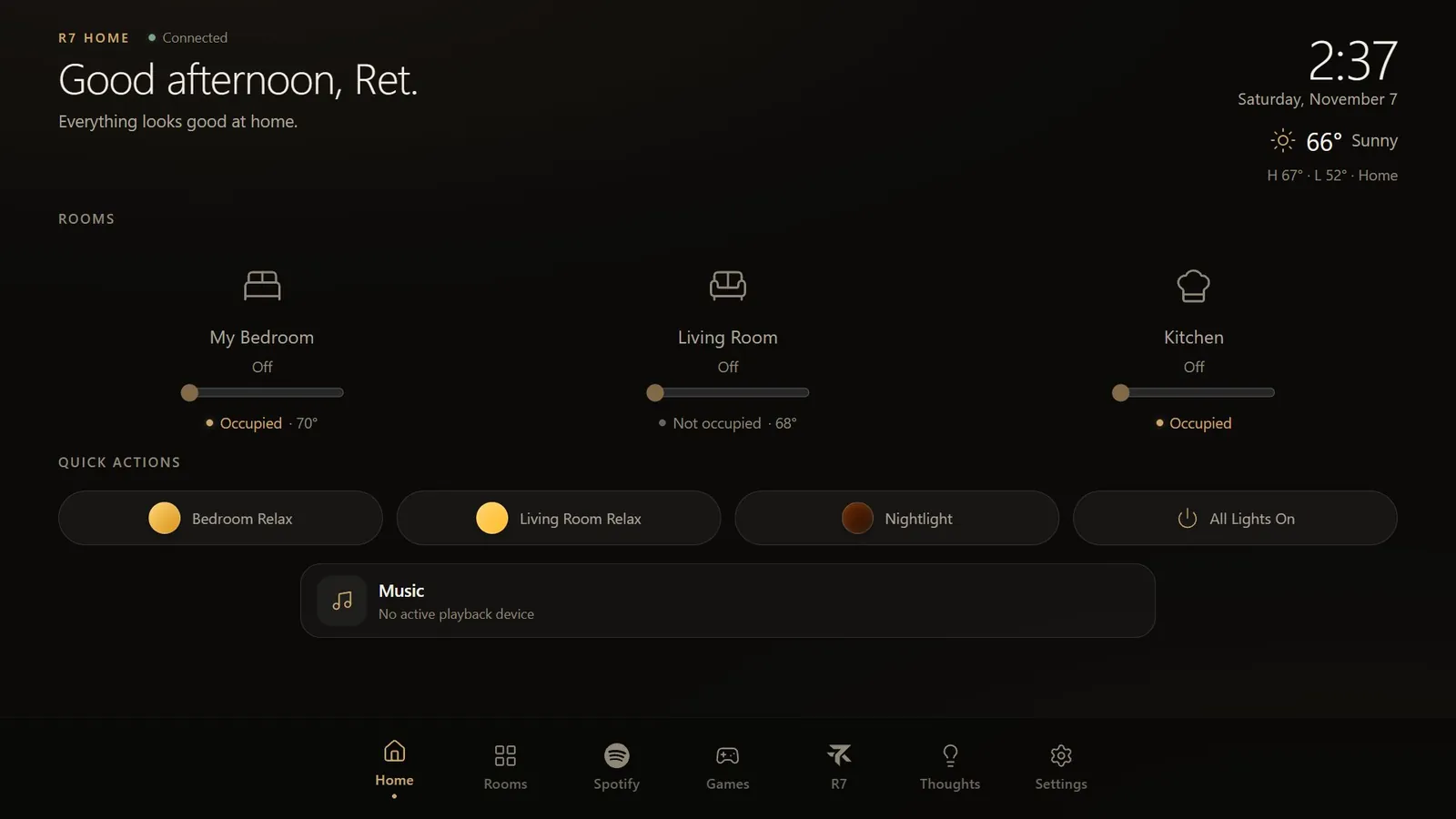
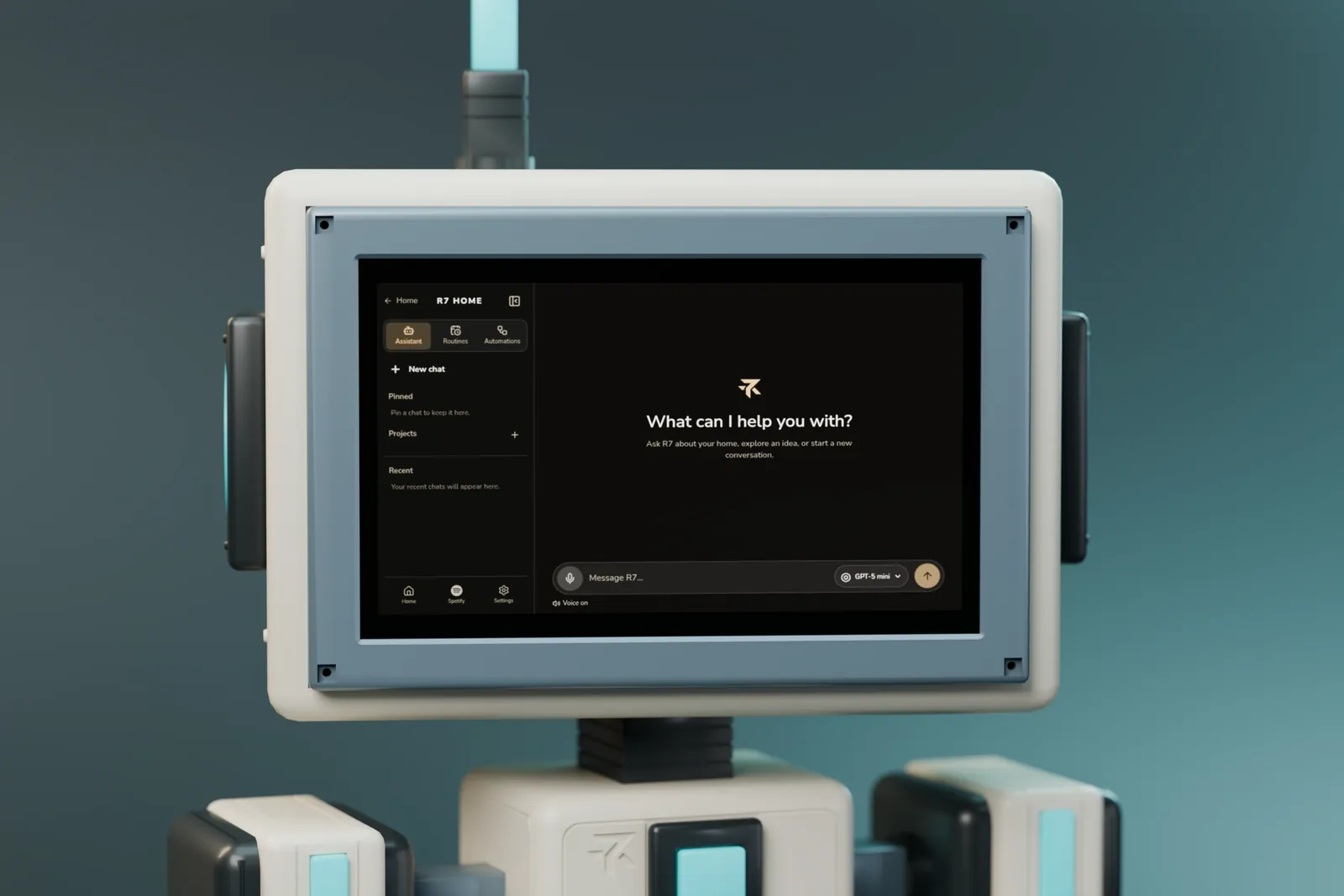
R7 Home puts all of it on one touchscreen that you can tap or talk to (“Hey R7”). It runs the lights and music, sets reminders, answers questions with sources, writes plans, remembers what you tell it, and checks on the house on a schedule. Two presence sensors tell it which rooms have people in them, so the lights come on when you walk in.
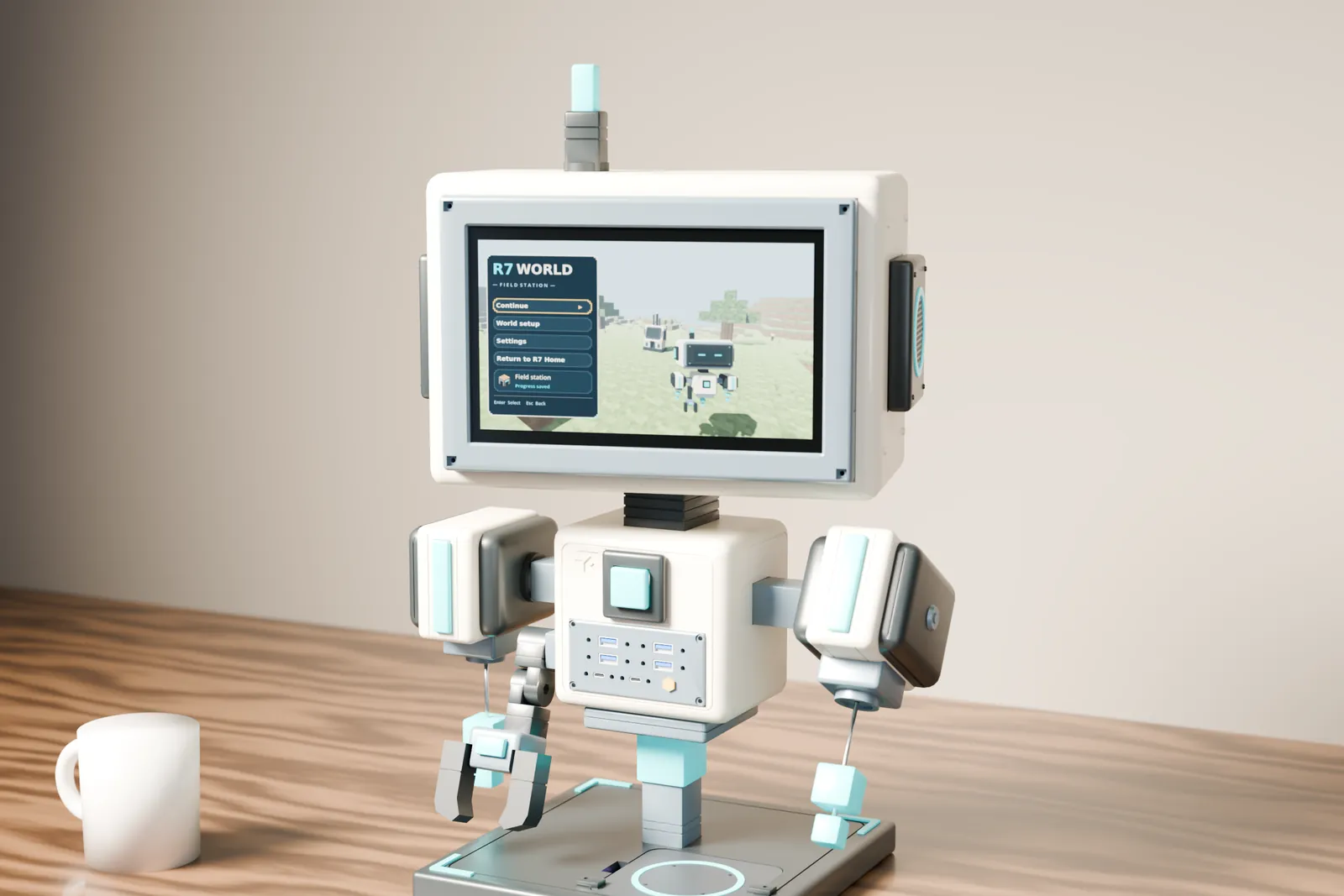
It runs on a Raspberry Pi, a small and cheap computer that sits behind the screen.
Where the AI comes in
The device listens for its wake word by itself, without sending audio anywhere. After that, an AI model works out what you meant and either does it or answers out loud in a natural voice. It also knows when to stay quiet.
Built to be safe
The key that controls the house stays on R7 Home’s own small server. The screen never sees it, so a bug in the interface can’t hand over control of the house.
What this means for you
The same pieces work in a business: one place staff can ask a question, reminders that don’t live in one person’s head, and a voice assistant that knows your hours and your routines.